Pole Bruises: Why They Happen and When They Finally Stop
Quick Answer: Pole bruises - the community calls them pole kisses - happen because new moves concentrate your full body weight onto small patches of untrained skin and tissue, and because beginners grip twice as hard as they need to. They cluster on the instep, shin, inner thigh, and waist, peak during the first two to three months and with every new move after, and genuinely taper as tissue conditions and technique relaxes. Time and lighter grip fix most of it; padding usually backfires; and bruising that appears without contact deserves a medical look.
Every pole studio has the same conversation happening somewhere in it: a newer student cataloging her shins, and an instructor saying - accurately, cheerfully - that it stops. It does stop. Here is why it starts, what speeds the stopping, and which parts of the folklore hold up.

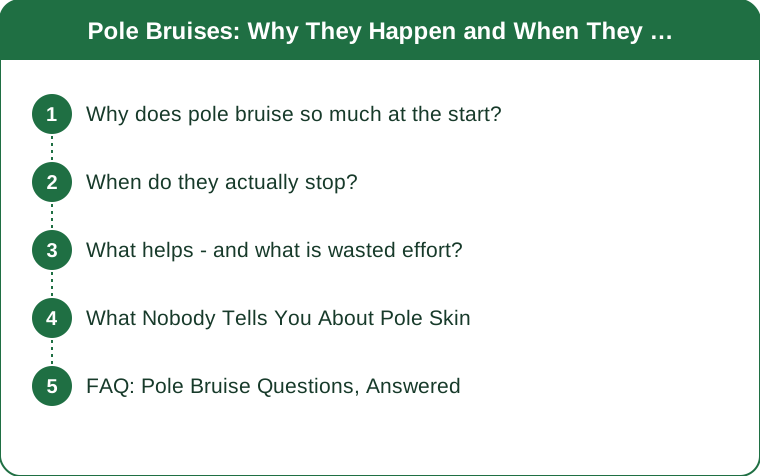
Why does pole bruise so much at the start?
Physics, multiplied by nerves.
The loads are enormous per square inch. A climb or a sit routes most of your body weight through a contact patch the size of a playing card - the instep hooked on the pole, a strip of inner thigh, the side of a knee. Skin and the tissue under it are simply not conditioned for that pressure yet, and capillaries under the surface give way. That is the bruise: a normal response to an abnormal (for now) load.
Beginners grip at panic strength. The death grip is universal in month one - squeezing far harder than the hold requires because the body does not yet trust the position. Extra squeeze means extra crush at exactly the contact points. As grip strength builds and the nervous system calms, the same move happens at a fraction of the pressure, which is the single biggest reason bruising fades with experience rather than accumulating forever.
Every new move opens a new account. The spin that no longer marks you did its bruising months ago; the new leg hang starts the cycle on a fresh patch of thigh. Even experienced dancers bruise when learning - the difference is they know it is a two-week toll, not a permanent tax.
The classic map, for reassurance purposes: tops of the feet and instep (climbs), shins (climbs and low spins), inner thighs (sits and hangs), waist and hip (waist holds), backs of knees (hooks). A new student with exactly this constellation is a new student doing it right.
And skin state matters more than anyone expects. Cold skin grips poorly, so you unconsciously clamp harder; moisturized-that-morning skin slides, same result. Warm, dry, lotion-free skin holds with less squeeze - and bruises less.
When do they actually stop?
On a schedule, more or less - and knowing the schedule is half the comfort.
The overall arc runs two to three months. For a once-or-twice-a-week beginner, the first eight to twelve weeks are peak bruise season. After that, the standing curriculum - climbs, sits, basic spins - stops marking you almost entirely. The tissue adapted, the technique relaxed, and the pole stopped being a surprise.
Each new move carries its own two-to-three-week cycle. The pattern repeats at every level: new move, fresh bruises at the new contact point, rapid taper as the hold refines and the tissue toughens. Advanced dancers describe bruising as episodic - tied to what they are learning, not to pole itself.
Conditioning is real and local. Repeated moderate pressure genuinely toughens the involved tissue - the same adaptation that lets gymnasts swing bars and barefoot runners run. It is site-specific, which is why a seasoned dancer’s shins are calm while her brand-new elbow hold marks like week one.
Breaks partially reset the clock. Two months away softens the adaptation; the first weeks back bruise more than you remember, then settle much faster than the original ramp. Worth knowing before the post-vacation panic.
Technique quietly does the heavy lifting. The refined version of any hold spreads load across more surface and squeezes only as hard as needed. This is why chasing better form - engaging through the legs, distributing contact, breathing instead of clamping - reduces bruising faster than any cream ever will.
The realistic promise: not zero bruises forever, but a steep decline from month three, and a future where marks mean progress on something new rather than damage from something old.

What helps - and what is wasted effort?
Ranked by return on effort.
Tier one: warm up the skin, not just the muscles. Arrive early enough that skin is warm before weight-bearing holds - warm skin grips at lower squeeze. Many dancers do their first climbs in warm-up layers, and the smart version of that is buttery-soft leggings over pole shorts: full coverage while the body heats, peeled down to bare-skin grip when the real work starts. Skip lotion on pole days entirely; slippery skin is death-grip fuel.
Tier two: incremental holds. Thirty percent of a new hold for three sessions beats one hundred percent once. Build the sit or hang in stages - partial weight, short duration, then full - and the tissue adapts ahead of the load instead of behind it. This is the technique-side fix that instructors mean when they say do not muscle it.
Tier three: grip strength off the pole. A stronger grip holds the same move with less panic-squeeze. Dead hangs, towel holds, and farmer carries a couple of times a week translate directly into calmer contact points.
The honest middle: bruise care. Once a bruise exists, time is the treatment. Arnica has mixed evidence and devoted fans - harmless to try. Ice helps a fresh, tender spot feel better. Neither meaningfully accelerates the color timeline, and concealer plus a good self-tanner remain the event-week tools of the trade.
Mostly wasted: padding the contact points. Knee pads have a place for floorwork, but padding gripping surfaces blocks the skin feedback the hold depends on - you grip harder, learn slower, and postpone the adaptation that ends the bruising. The community consensus is near-universal: bare skin, patience, technique.
And the flag worth stating plainly: bruises appearing without remembered contact, bruising dramatically out of proportion to training, or marks that refuse to fade for weeks belong in a conversation with a doctor - iron status and a few other ordinary, checkable things can amplify bruising. General information, not medical advice.
What Nobody Tells You About Pole Skin
Grip products change the equation more than any bruise cream. Half of early over-gripping is fighting sweat. A dry-grip product for sweaty hands, or a light tack product where the studio allows it, drops the required squeeze instantly - many students report their bruising eased the same week their grip aid arrived. Ask instructors what works with the studio’s poles; products and pole finishes interact.
The clothing paradox confuses every beginner. Pole needs bare skin to grip - which is why shorts are the uniform - but cold studios and warm-ups want coverage. The working system: layers you can shed as you heat up, yoga pants or joggers for floorwork-and-conditioning days, skin out only for the holds that need it. Nobody grips well cold, covered, or freshly moisturized; the wardrobe is grip equipment.
Photograph the journey, not just the bruises. The pole-kiss photo is a beloved community genre - badge-of-progress energy - but the more useful series is the move itself, monthly. The bruises fade from the pictures at exactly the rate your form improves, which is the most motivating graph nobody plots.
Pride culture has a limit worth respecting. Normalizing bruises is healthy; normalizing pain is not. A bruise is dull, surface-level, and fades on schedule. Sharp pain, joint pain, or anything that changes how you move is a different category and a reason to stop and ask - the toughness that ignores it costs months.
Sheets and shins have a relationship now. New bruises plus rough sheets equals noticing your hobby at 2 a.m. Softer bedding and loose sleep layers are unglamorous quality-of-life upgrades of the first months.
And the shins go quiet sooner than the thighs. Contact points toughen in the order you load them - climbs come early, so feet and shins adapt first, while inner-thigh holds arrive later in the curriculum and mark accordingly. The map of your bruises is literally the map of your syllabus.
FAQ: Pole Bruise Questions, Answered
Are pole bruises normal?
Completely - they are the standard tissue response to concentrating body weight on small, untrained contact patches, amplified by beginner over-gripping. The classic sites are the instep, shins, inner thighs, waist, and backs of knees. They peak in the first two to three months and taper sharply as technique and tissue adapt.
How do I make pole bruises heal faster?
Mostly you let time work - a typical bruise runs its color cycle in one to two weeks regardless of intervention. Ice soothes fresh, tender spots; arnica has mixed evidence and is harmless to try; concealer and self-tanner handle event weeks. The higher-leverage move is prevention: warm skin, lighter grip, incremental holds.
Why do I suddenly bruise more some weeks?
Usually because the curriculum moved - every new move loads a fresh, unconditioned contact point and restarts a two-to-three-week mini-cycle. Returning from a break does the same. If bruising spikes without any new-move explanation, or marks appear without contact, that is worth a medical conversation rather than a training adjustment.
Should I train through a bruise?
Through an ordinary dull bruise, yes - most dancers do, and gentle continued training builds the very conditioning that ends the bruising era. Give a genuinely tender spot a session off from direct pressure, and treat sharp or joint pain as a full stop rather than a badge. Bruises are the toll; pain is a detour sign.
TL;DR:
- Pole kisses come from body weight on small untrained contact patches plus beginner death-grip.
- Peak season is months one through three; each new move adds its own two-to-three-week cycle after.
- Warm, dry, lotion-free skin and lighter grip prevent more than any cream heals.
- Skip padding on grip surfaces - it delays the adaptation that ends the bruising.
- Unexplained or excessive bruising is a doctor question, not a training question.
The bruises were never the price of pole. They were the receipt for learning it - and the receipts stop printing right about when the climbing gets easy.
See It in Motion
Seen here: Super High Waist Embossed Yoga Leggings with Inner Pocket — shop it on bubblelime.com
Keep Reading
This article is for general informational and styling purposes only. Fit, sizing, and product availability may vary — check current details before purchasing.