Pole Dance Bruises: How Much Is Normal, and When Should You Actually Worry?
Quick Answer: Light bruising on inner thighs, knees, and the backs of arms is a normal part of learning pole grip points in the first several months. Bruising should fade within a week to 10 days; bruises that get progressively worse, don’t fade, or come with swelling or sharp pain are a sign to adjust technique or take rest days.
Every pole dancer bruises when they’re learning new grips — it’s the price of finding where your body needs to hold on. The question isn’t whether you’ll bruise, but whether your bruising pattern is normal or a signal something needs to change.

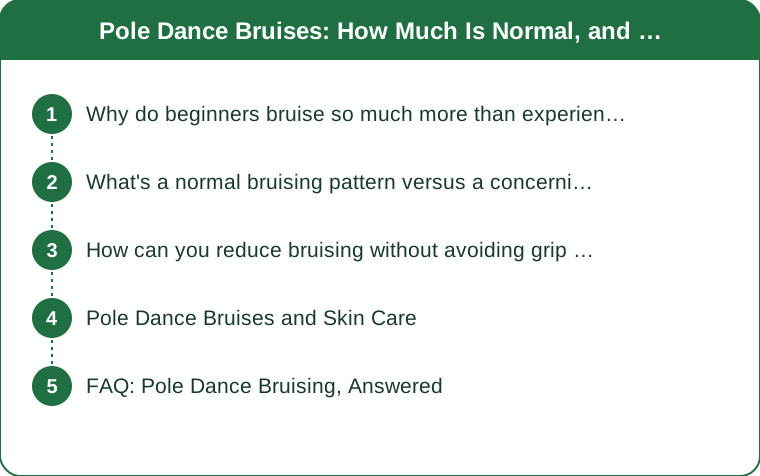
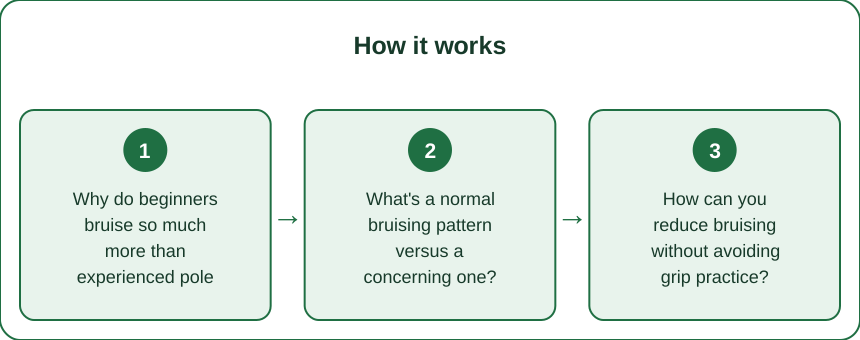
Why do beginners bruise so much more than experienced pole dancers?
Because new grip points require full-contact pressure while your body learns exactly where and how much to hold on, and that calibration takes practice. Experienced dancers bruise less over time not because their skin toughens dramatically, but because they’ve learned the precise minimum contact needed for each grip — beginners tend to grip harder and less precisely than necessary.
This is why bruising concentrated on inner thighs, backs of knees, and inner arms in the first few months is considered a completely normal part of the learning curve.
What’s a normal bruising pattern versus a concerning one?
Normal: light-to-moderate bruises on inner thighs, knee backs, or upper arms that fade within 7-10 days and don’t worsen with continued practice.
A sign to adjust: bruises that get darker or larger with each subsequent class rather than fading, bruising accompanied by swelling or sharp localized pain, or bruises in unusual spots (spine, tailbone, wrists) that suggest technique issues rather than normal grip contact.
The second pattern usually means either grip technique needs adjustment or you need more recovery days between sessions.

How can you reduce bruising without avoiding grip practice?
Build up contact gradually — spend more time on low-intensity grip drills before attempting full-weight moves that require maximum contact pressure.
Rotate contact points across a training week rather than drilling the same grip daily, giving bruised areas recovery time.
Arnica gel or cream, applied to fresh bruises, is widely used in the pole community and may speed visible fading, though evidence is mostly anecdotal rather than clinically proven.
Longer pants or a light compression layer during early grip-heavy drilling can reduce direct-contact intensity while you’re still calibrating technique.
Pole Dance Bruises and Skin Care
Beyond bruising itself, repeated grip contact can cause skin irritation or calluses on hands and inner arms over time — this is separate from bruising but part of the same adaptation process. Keeping skin moisturized on rest days (not right before class, since lotion reduces grip) helps prevent cracking, while light exfoliation prevents built-up dead skin from affecting grip quality.
FAQ: Pole Dance Bruising, Answered
Is it normal to bruise even after a year of consistent practice?
New moves and new grip points will still cause some bruising even for experienced dancers — it’s move-specific, not purely a beginner phenomenon.
Should I take a full week off if I’m bruised?
Not necessarily — light practice avoiding the bruised area usually works, unless there’s swelling or sharp pain, which does warrant real rest.
Do bruises mean I’m doing the move wrong?
Not always — some bruising is simply part of learning where and how much to grip. Progressively worsening bruises in the same spot are more likely a technique signal than occasional fresh bruising from a new move.
TL;DR:
- Light bruising on inner thighs, knees, and arms is normal while learning grip points
- Bruises should fade within 7-10 days — worsening or non-fading bruises signal a technique or rest issue
- Build contact gradually and rotate grip points across the week to reduce cumulative bruising
- Arnica gel and rest-day moisturizing support recovery between sessions
Track how your bruises heal, not just how many you get — fading on schedule is the real sign you’re training sustainably.
Keep Reading
This article is for general informational and styling purposes only. Fit, sizing, and product availability may vary — check current details before purchasing.