Competitive Pole vs. Recreational Pole: What Actually Changes If You Cross Over
Quick Answer: Competitive pole adds structured routine choreography, judged technical criteria, and a training volume increase (often 2-3x recreational hours) months before an event. Recreational pole stays exploratory and low-pressure. Neither is “more legitimate” — they’re different goals requiring different commitments.
You’ve enjoyed recreational classes for a while and someone suggests you’d be good at competing. It’s a real option, but it changes more about your training than just adding a performance date to your calendar.
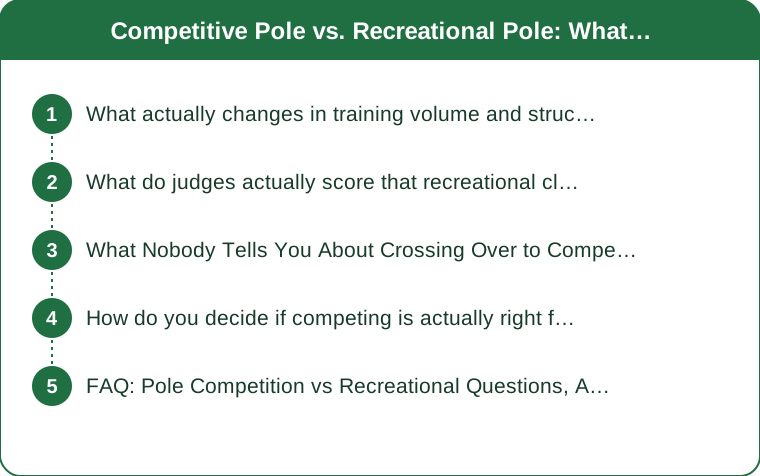
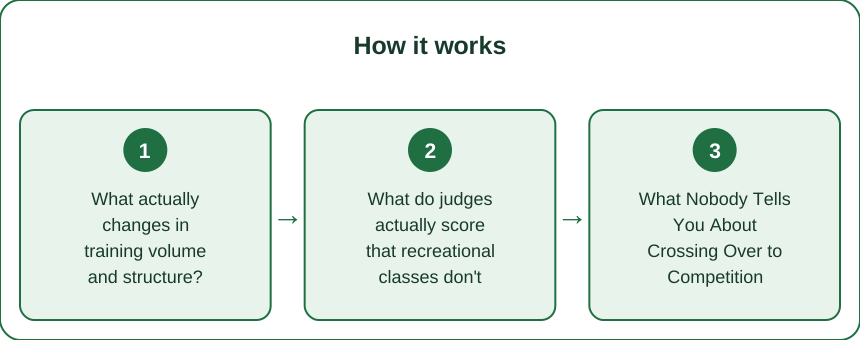
What actually changes in training volume and structure?
Recreational pole typically involves 1-3 classes a week exploring varied moves and combos with no fixed routine. Competition prep usually means committing to one specific choreographed routine months in advance, with significantly more repetition of the same sequence to build muscle memory, stamina, and performance polish — often 4-6+ hours weekly closer to competition date.
This shift from varied exploration to repeated, structured practice is the single biggest training difference between the two paths.
What do judges actually score that recreational classes don’t emphasize?
Competition judging criteria typically include technical execution (clean lines, controlled transitions), musicality (movement matching music phrasing), choreography and staging (using the full space, storytelling), and difficulty level of tricks attempted. Recreational classes focus more on personal enjoyment and progressive skill-building without this specific scoring lens.
This means competitive training often includes video review and detailed feedback sessions that recreational classes rarely incorporate.
What Nobody Tells You About Crossing Over to Competition
The performance and stage-presence element surprises many recreational dancers moving to competition — pole competitions are judged as much on presentation and connection with the audience as on trick execution, which requires a different skill set than technical proficiency alone.
Also: competition prep often means training through minor fatigue and repetition-related soreness in a way recreational pole, done for enjoyment, generally doesn’t require — the intensity trade-off is real and worth being honest with yourself about before committing to a competition date.
How do you decide if competing is actually right for you?
Consider whether you’re motivated by the process of repeated refinement (competition) or ongoing variety and exploration (recreational) — both are valid pole goals, and forcing yourself into competition prep without enjoying repetitive structured practice often leads to burnout rather than growth.
Many studios offer a middle path: a showcase or non-judged performance event, which gives the choreography and staging experience without the full competitive scoring pressure — a good test before committing to an actual competition.
FAQ: Pole Competition vs Recreational Questions, Answered
How far in advance should I start training for a first competition?
Most first-time competitors start dedicated routine training 4-6 months before the event, allowing time to build both the choreography and the stamina to perform it cleanly.
Do I need to already have advanced tricks to compete?
No — most competitions have skill-level divisions, so beginners and intermediate dancers can compete within an appropriate category rather than needing elite-level tricks.
Can I go back to purely recreational pole after competing once?
Yes, completely — many dancers compete occasionally and return to recreational classes between events; it’s not an all-or-nothing commitment.
TL;DR:
- Competition shifts training from varied exploration to repeated, structured routine practice
- Judges score technical execution, musicality, choreography, and difficulty — not just enjoyment
- Stage presence and performance skills are an underrated part of the crossover
- A studio showcase is a lower-pressure way to test interest before a full competition
Keep Reading
This article is for general informational and styling purposes only. Fit, sizing, and product availability may vary — check current details before purchasing.