Why Your Hands Sweat Through Every Pole Class (and What Actually Helps)
Quick Answer: Sweaty-hand grip loss is usually nerves plus studio humidity stacking on top of each other, not a sign you need to quit. Drying agents like liquid chalk address the moisture; breathing and pacing address the nerves underneath it.
You nail the climb in the dry-run walkthrough, then thirty seconds into the actual combo your hands slide right off the pole like it’s coated in oil.
Why do my hands sweat more in pole class than anywhere else?
Nervous sweat and exertion sweat are chemically similar but triggered differently — pole combines the adrenaline of performing in front of others with genuine physical effort, so both sweat pathways fire at once. This is normal and not a sign of poor conditioning.
Humid studios make it worse because sweat can’t evaporate off your skin as efficiently, leaving a slick film even if you’re not sweating more than usual.
What Nobody Tells You about grip aids
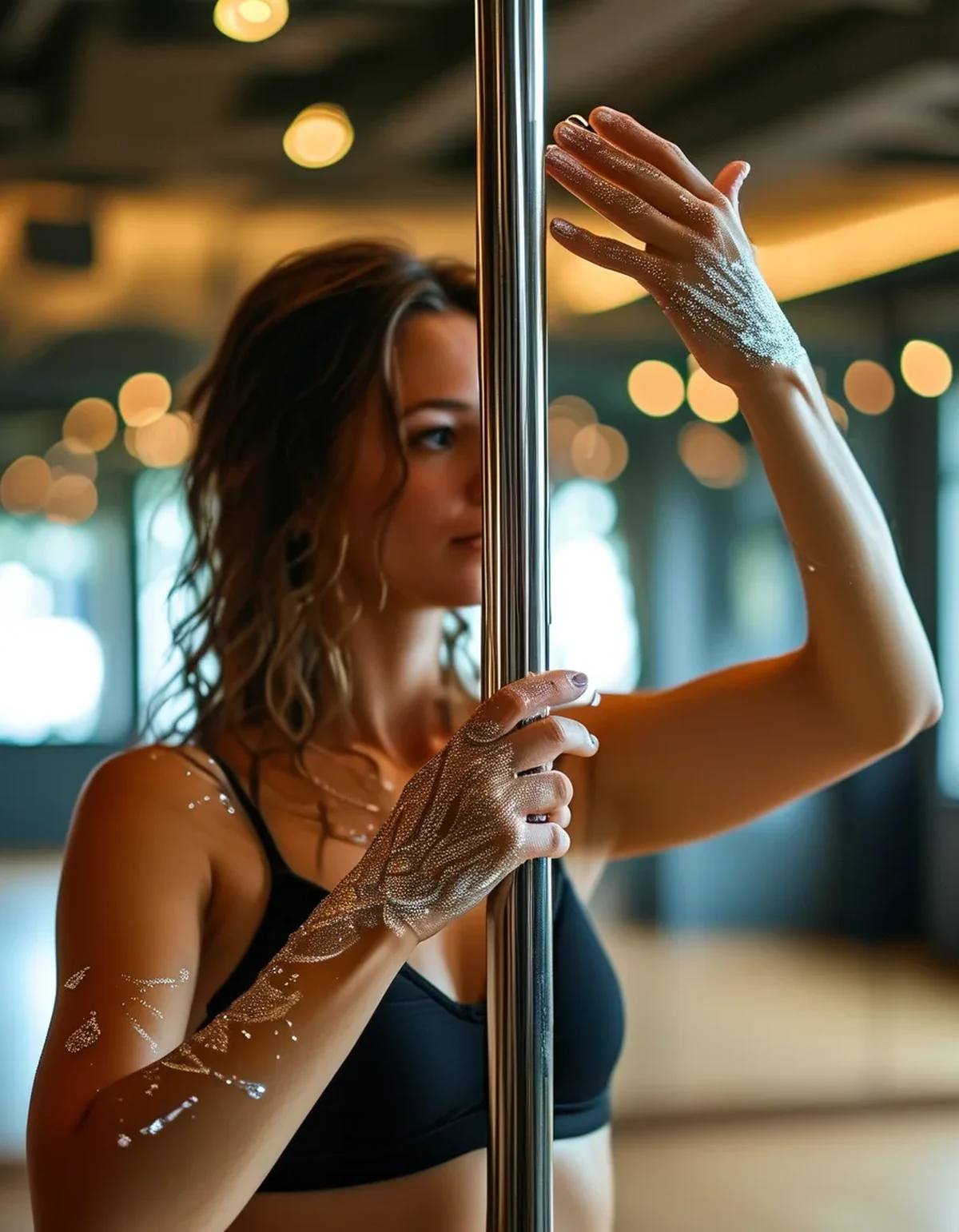
Liquid chalk isn’t magic — it dries out the top layer of sweat but does nothing if you keep re-wetting your hands by wiping them on damp leggings between tricks. Reapply to fully dry hands, not sweaty ones, or you’re just making a paste.
Antiperspirant made for hands (not the underarm kind) applied the night before class works better for chronic sweaters than any in-class product, since it reduces sweat production at the source rather than managing it after the fact.

Does the type of pole finish change how much this matters?
Chrome poles get slippery fast with any moisture and reward heavy grip aid use, while powder-coated poles have natural texture that holds up better against light sweat. Silicone poles sit in between — grippy when dry, treacherous when damp.
If your home pole and your studio pole have different finishes, don’t assume a grip routine that works on one will translate directly to the other.
How much does breathing actually affect sweat and grip?
Shallow, held breath during a scary move spikes your heart rate and adrenaline, which drives sweat production up further. Exhaling through the hard part of a climb or invert keeps your nervous system calmer and measurably reduces the panic-sweat spiral.
Instructors who cue breath during static holds aren’t just being mindful — it’s a practical grip strategy.
FAQ: Pole Dance Hand Sweat Questions, Answered
Is it normal for grip to get worse as a class goes on?
Yes — as your body warms up and works harder, sweat output increases, so many dancers need to reapply grip aid mid-class rather than relying on one application at the start.
Can diet affect how much I sweat during pole?
Hydration status and caffeine intake both influence sweat volume; being well-hydrated (not over-hydrated right before class) and going easy on pre-class coffee tends to help more than any single supplement.
Should beginners avoid grip aids entirely to build natural grip?
No — fighting excessive sweat with your bare hands just teaches fear of falling, not better technique; use grip aid freely early on and focus on form, tapering off products only if and when your natural grip catches up.
TL;DR:
- Sweaty hands in pole class combine nerve sweat and exertion sweat, and it’s normal
- Apply grip aid to dry hands only, and reapply as the class heats up
- Match your grip routine to your pole’s finish — chrome needs more help than powder-coat
- Steady exhales during hard moves genuinely reduce panic sweat
Grip struggles are a solvable logistics problem, not a verdict on your ability, so don’t let a slippery class shake your confidence.
Keep Reading
This article is for general informational and styling purposes only. Fit, sizing, and product availability may vary — check current details before purchasing.