When Your Hair Gets Caught on the Pole
Quick Answer: Hair catches because a spinning pole plus grip aid plus sweat creates friction the hair cannot slide off. The fix is a smooth, secure, low-profile style with nothing loose — a tight low bun or a braided bun sits closest to the head and gives a spinning pole nothing to grab. Loose ponytails and half-up styles are the most common cause. If your hair does catch mid-move, stop rotating and come down before untangling; pulling against the spin is how people get hurt.
It usually happens on a spin, in an inverted position, exactly when you are least able to do anything about it.
Here is why it happens, and how not to have it happen again.
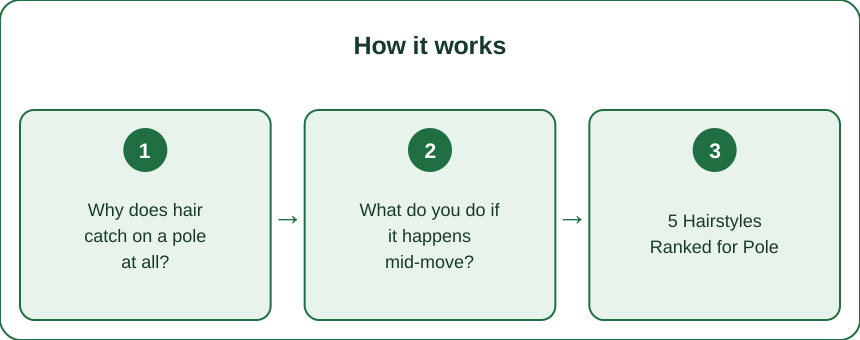
Why does hair catch on a pole at all?
A combination of three things, all of which are worse in the positions where it matters most.
Grip aids are adhesive by design. Whatever you use — a tacky grip, a drying agent, rosin — is on your hands and it transfers to the pole. It also gets onto your hair when you touch your head. Hair against a tacky surface does not slide, it sticks.
Sweat makes hair cling. Damp hair clumps and lies flat against surfaces, and the same moisture that makes your hands slip makes your hair stick. This is why catching happens later in a session rather than at the start.
A spinning pole adds rotation. On static pole, hair against the pole simply drags. On spin mode, the pole is rotating relative to your body, which means hair in contact is being actively wound. That is the mechanism behind the sudden, sharp pull that people describe, and it is why spin pole is where this becomes genuinely dangerous rather than annoying.
Inversions put your head near the pole. Upside down, your hair falls toward the pole rather than away from it, and gravity does the rest. Any move where your head passes close to the pole — inverts, layback positions, superman, anything with a shoulder mount — is where hair finds the pole.
And loose ends are the specific culprit. A style can be secure at the root and still have twenty centimetres of loose length swinging free. It is almost always the ends that catch first, and then pull the whole style with them.
What do you do if it happens mid-move?
Stop the rotation, get down, then deal with the hair. In that order, and the order matters.
Do not pull away from it. The instinct is to yank your head back, which tightens the wind and can tear hair from the scalp. It also destabilises you at exactly the moment you need control.
Stop the spin first if you can. Grip the pole with your hands or legs to arrest rotation. Every further degree of rotation winds more hair in.
Come down under control, keeping your head close to the pole. Moving your head away increases tension. Staying close keeps the tension low while you descend. This feels counterintuitive and it is the correct move.
Get both feet on the floor before untangling. Almost every injury in this situation comes from trying to solve the hair problem while still in the air.
Then unwind, do not pull. Rotate your head in the opposite direction to the wind, or turn the pole back if it is a spin pole and you can reach it. If the hair is stuck to grip residue rather than wound, a little water or a wipe will release it.
Tell the instructor. In a class setting this is worth saying out loud rather than quietly sorting out, both because they may need to help and because a pole with tacky residue and hair on it needs cleaning before the next person uses it.
And expect it to shake you. A sharp scalp pull while upside down is genuinely unpleasant and it is normal for confidence to dip for a session or two afterward. Going back to a static pole for a class while you rebuild trust is a reasonable choice, not a step backwards.
5 Hairstyles Ranked for Pole
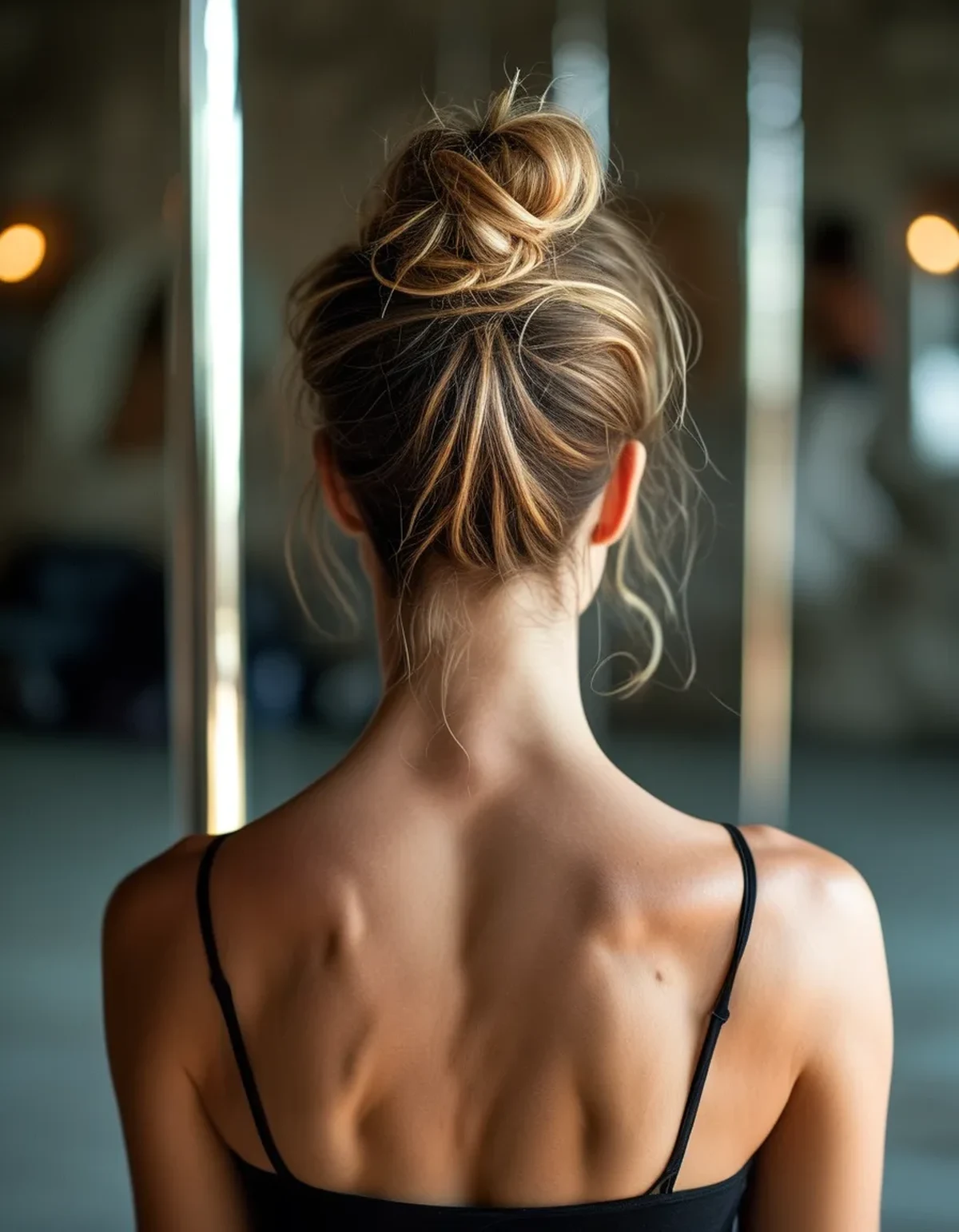
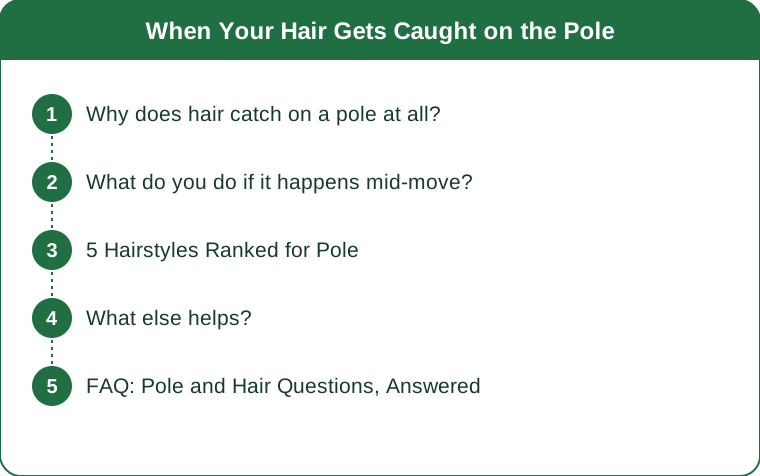
1. The tight low bun — the best option. Sits low, close to the head, with no loose ends anywhere. Smooth it with a little gel or cream so nothing escapes, secure with a covered elastic and cross two bobby pins over it. Low rather than high matters: a high bun sits exactly where your head meets the pole in a shoulder mount or an invert.
2. The braided bun — nearly as good, and better for very long hair. Braid first, then coil and pin. The braid contains the length so there is no loose section to work free, and it holds up better through a long session. For hair past mid-back this is the most reliable option there is.
3. Two French braids or a single tight French braid — good, with a caveat. Braided flat against the head is secure and comfortable, and the caveat is the tail. A braid ending in a loose tail still has a swinging end that can catch, so tuck and pin the end or fold the braid up on itself.
4. A high ponytail — poor. It swings, it is long, and it sits exactly where your head passes the pole in inverted work. It is also the most common style in beginner classes, which is why hair catching is a beginner experience.
5. Half-up, or hair down — worst. Everything loose, everything at head height, and the greatest possible surface area against the pole. Hair down is fine for a photoshoot and genuinely unsafe for spin pole and inversions.
Two notes that apply to all of them. Use covered or seamless elastics rather than anything with a metal join, because metal against a pole is unpleasant and can scratch the finish. And avoid hairspray entirely — it transfers to the pole and creates exactly the sticky patch you spend the rest of the class trying to avoid.
What else helps?
A few habits that reduce the problem beyond the hairstyle itself.
Do your hair before you apply grip aid. Touching your head with tacky hands is how grip ends up in your hair, and grip in your hair is what makes it stick. Hair first, then hands.
Wipe the pole between attempts. Residue builds through a session, and a pole with a sticky band at head height will catch hair that a clean pole would not. This is normal studio practice and worth doing even when nobody is asking.
Keep a spare set of elastics and pins in your bag. Styles loosen as you sweat, and being able to redo it mid-session rather than pushing through with a failing bun prevents the whole problem.
Consider length honestly. Very long hair is a genuine constraint in pole, and plenty of people find that a braid-and-pin routine takes two minutes and solves it permanently. Nobody needs to cut their hair for this — they do need a routine.
Watch out for grip products in the hair specifically. Some drying grips are alcohol-based and are drying to hair as well as skin. If your ends have got noticeably crispier since you started pole, that is likely the cause, and keeping hair fully contained solves both problems at once.
Seasonal note that catches people out: as studios get cooler in autumn, many people start wearing hair down to class because they are cold on the way in, and then leave it down for the warm-up. That is exactly when the first spins happen. Tie it up before you start moving, not after.
And if you have hair extensions, wefts or a weave, be more conservative than this whole article suggests. Attachment points concentrate force at a small area of scalp, and a pole catch there is more likely to cause real damage. A full braided-and-pinned style is not optional in that case.
FAQ: Pole and Hair Questions, Answered
Can hair actually cause an injury?
A sharp scalp pull is the usual outcome and it is painful rather than serious. The real risk is losing control of a move because of the surprise, particularly while inverted, and that is what the technique advice above is for.
Does hair damage the pole?
Not the hair itself, but hairspray, oils and product residue do leave a film that ruins grip for everyone using it afterwards. This is the main reason studios ask people to tie hair back.
What about a bandana or a headband?
A headband helps with sweat and flyaways but does nothing for length, which is the actual problem. A wide fabric headband can also slip during inversions. Use one alongside a bun, not instead of it.
Is short hair completely safe?
Mostly, though a bob at chin length can still catch on a spin pole. Anything long enough to hang forward when you tilt your head is long enough to catch.
Should I use dry shampoo before class?
It is better than coming to class with oily hair, since oil transfers to the pole. Apply it well before and brush it through thoroughly — powder residue on the pole causes its own grip problems.
My scalp hurts after class even without catching. Why?
A very tight bun worn for an hour while inverted and sweating pulls on follicles continuously. Tight styles worn repeatedly are associated with traction hair loss over time, so alternate the position of your bun and do not make it tighter than it needs to be.
TL;DR:
- Hair catches because grip residue plus sweat plus rotation gives it nothing to slide against — worst on spin pole and in inversions.
- If it catches: stop the rotation, keep your head close, get down first, then unwind. Never pull away.
- Low bun or braided bun is the answer. High ponytails and half-up styles are the usual cause.
- Do your hair before you touch grip aid, and skip hairspray entirely — it transfers to the pole.
- Very long hair or extensions means braid-and-pin every session, not most sessions.
Tie it up before the warm-up, not after the first spin. That is when it happens.
Keep Reading
This article is for general informational and styling purposes only. Fit, sizing, and product availability may vary — check current details before purchasing.