Stuck at the Same Pole Fitness Level for Months? Here's the Likely Reason
Quick Answer: Pole strength plateaus usually come from practicing the same moves repeatedly without dedicated conditioning work — adding 2 sessions a week of pole-specific strength conditioning (not just running combos) typically breaks through a stall within 4-6 weeks.
You show up to class every week, run the same combos, and the invert you’ve been chasing for two months still isn’t landing. The plateau usually isn’t a skill problem — it’s a strength-supply problem.

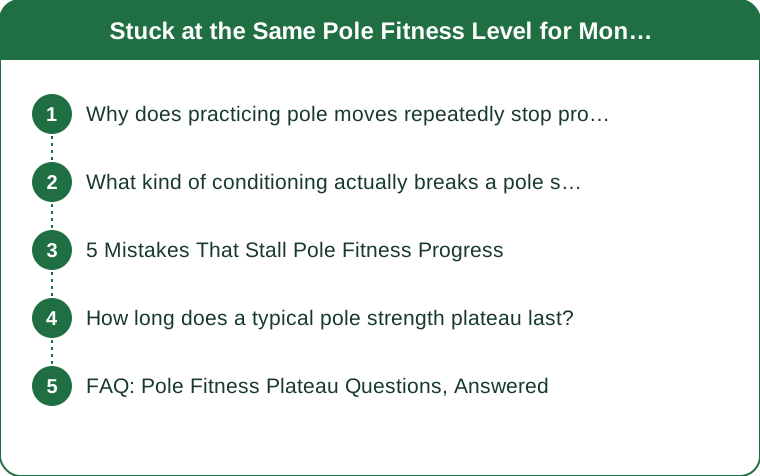
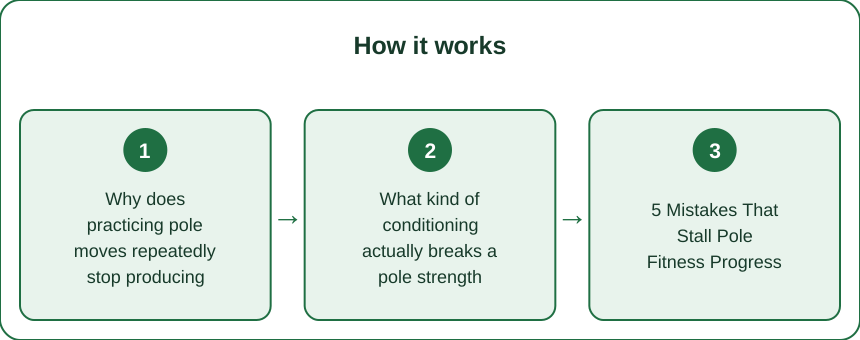
Why does practicing pole moves repeatedly stop producing progress?
Because running combos in class practices coordination and technique, but doesn’t systematically overload the specific strength (grip, core, shoulder stability) that unlocks the next-level move. You can practice a move correctly 50 times and still lack the raw strength to execute it — technique refinement has a ceiling that pure strength has to unlock.
This is especially true for strength-gated moves like inverts, which require a specific threshold of core and grip strength that class combo practice alone often doesn’t build fast enough.
What kind of conditioning actually breaks a pole strength plateau?
Targeted conditioning outside of class, 2x per week, focused on the specific strength component your stuck move requires. For inverts specifically: hanging leg raises, pole sit holds, and shoulder stability work (scapular pulls, planks). For grip-dependent moves: dead hangs and grip-specific hand strength work.
Most pole studios and instructors can identify which specific strength component is missing for a given stuck move — asking directly (‘what strength do I actually need for this’) often reveals a more precise gap than more repetition of the move itself would.

5 Mistakes That Stall Pole Fitness Progress
1. Only practicing the move itself, never the isolated strength component. Break the move down into its strength requirements and train those separately.
2. Skipping conditioning days as ‘not real pole practice.’ Off-pole conditioning is often what unlocks on-pole progress.
3. Not resting between plateau-breaking sessions. Strength conditioning needs 48 hours recovery like any resistance training — daily grinding on the same stuck move can actually slow progress.
4. Comparing timeline to other students. Strength-to-bodyweight ratio varies hugely between people; the same move can take vastly different timelines for different bodies, none of it wrong.
5. Ignoring grip fatigue as a signal. If grip gives out before the move’s coordination challenge does, that’s specifically grip strength to train, not the move itself to keep repeating.
How long does a typical pole strength plateau last?
4-6 weeks of dedicated, targeted conditioning is a realistic window to feel meaningful progress on most strength-gated moves, assuming the correct strength component was identified and trained consistently. Plateaus that persist past 8-10 weeks of real targeted conditioning are worth a form check — sometimes what looks like a strength gap is actually a technique or body positioning issue.
FAQ: Pole Fitness Plateau Questions, Answered
Is it normal to plateau in pole fitness?
Yes, extremely common — most consistent pole students describe plateaus as a normal part of the progression, not a sign of doing something wrong.
Should I take a break if I’m plateaued?
A short break (a few days) can help mentally, but the more effective response is usually adding targeted conditioning rather than stepping away from training entirely.
Can grip strength training help even if my stuck move isn’t grip-dependent?
Yes — grip fatigue affects endurance and confidence in nearly every pole move, so general grip conditioning tends to have broad carryover benefits beyond the specific stuck move.
TL;DR:
- Repeating the move in class builds technique but has a strength ceiling of its own
- Add 2x weekly targeted conditioning for the specific strength gap (grip, core, shoulder)
- Identify exactly which strength component is missing rather than just repeating the move
- 4-6 weeks of real targeted conditioning is a realistic window to break through
Keep Reading
This article is for general informational and styling purposes only. Fit, sizing, and product availability may vary — check current details before purchasing.