The Wrist Pain Almost Every New Pole Dancer Gets — and How to Avoid It
Quick Answer: Beginner wrist pain in pole dancing usually comes from bearing too much bodyweight through a bent or overextended wrist during climbs and holds, rather than distributing load through the whole arm and shoulder. Building basic wrist and forearm conditioning, plus correcting hand positioning, resolves most early wrist strain.
Sore wrists in your first few weeks of pole feel like an inevitable rite of passage — but persistent pain, not just muscle fatigue, is usually a sign of a fixable technique gap, not something you just have to push through.

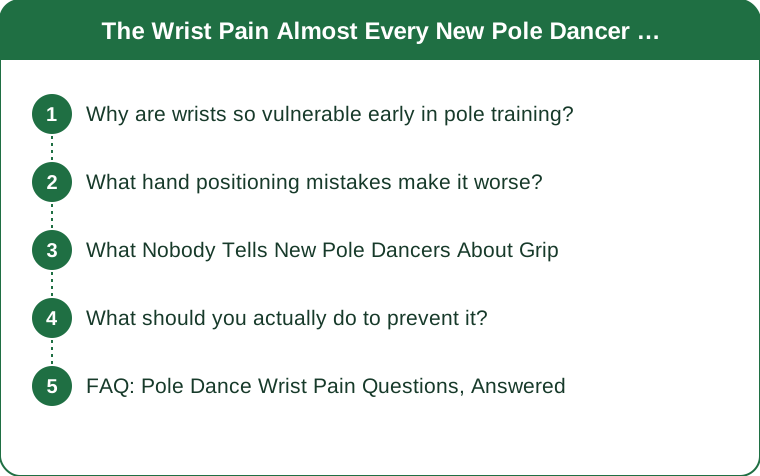
Why are wrists so vulnerable early in pole training?
New pole dancers haven’t yet built the forearm and grip strength that experienced dancers rely on, so the body compensates by loading more force through the wrist joint itself rather than distributing it through conditioned muscle.
Climbs, spins, and static holds all require sustained grip under bodyweight load — a joint that isn’t used to that kind of sustained pressure is going to feel it first, especially in the first 4-6 weeks of training.
What hand positioning mistakes make it worse?
A bent or overly flexed wrist during a grip — rather than a straighter, more neutral wrist angle — concentrates force at the joint instead of spreading it through the forearm muscles.
This is the single most correctable mistake beginners make: gripping with the wrist cocked back or forward under load, often without realizing it, because the focus is naturally on the move itself rather than joint angle.

What Nobody Tells New Pole Dancers About Grip
Most beginner classes focus heavily on climbs and spins from day one, but almost none include dedicated forearm and grip conditioning — the exact strength that would prevent the wrist strain those same moves cause.
Building grip endurance off the pole, through simple dead hangs or grip trainers for a few minutes several times a week, closes this gap faster than pole practice alone, since pole sessions are often too infrequent early on to build conditioning on their own.
What should you actually do to prevent it?
Add short dead hangs from a pull-up bar (10-20 seconds, building up gradually) 2-3 times a week outside of class, focusing on a neutral wrist position throughout.
In class, ask an instructor to check your grip angle specifically during static holds — a quick visual correction on wrist position often prevents weeks of accumulating strain that’s harder to unlearn later.
FAQ: Pole Dance Wrist Pain Questions, Answered
Is some wrist soreness normal for beginners?
Mild, dull soreness after a new session is common as muscles adapt. Sharp pain, or soreness that doesn’t improve with rest, is a sign to check technique or scale back frequency.
Should I wear a wrist brace during pole class?
A brace can help short-term while correcting technique, but relying on it long-term without addressing wrist positioning just delays the underlying issue.
How long does it take to build enough grip strength to stop wrist pain?
Most beginners notice a meaningful reduction in wrist strain after 3-4 weeks of consistent, dedicated grip conditioning alongside regular class attendance.
TL;DR:
- Beginner wrist pain usually comes from bearing bodyweight through a bent wrist instead of a conditioned forearm and grip
- A neutral wrist angle during grips distributes force more safely than a flexed or cocked wrist
- Dedicated grip conditioning (dead hangs, grip trainers) outside class closes the strength gap faster than pole practice alone
- Ask an instructor to check your grip angle specifically — small corrections prevent weeks of accumulating strain
If your wrists ache after every class, it’s probably not something to push through — it’s a conditioning gap with a specific, fixable answer.
Keep Reading
This article is for general informational and styling purposes only. Fit, sizing, and product availability may vary — check current details before purchasing.