Pole Strength Milestones: The Moves That Mark Your First Year
Pole fitness progress arrives as named milestones — the first spin that flows, the first climb, the invert that changes everything — each marking real strength gains that gyms would measure in plates. The first-year ladder: the moves, the strength between them and the honest timelines.
The Milestone Ladder
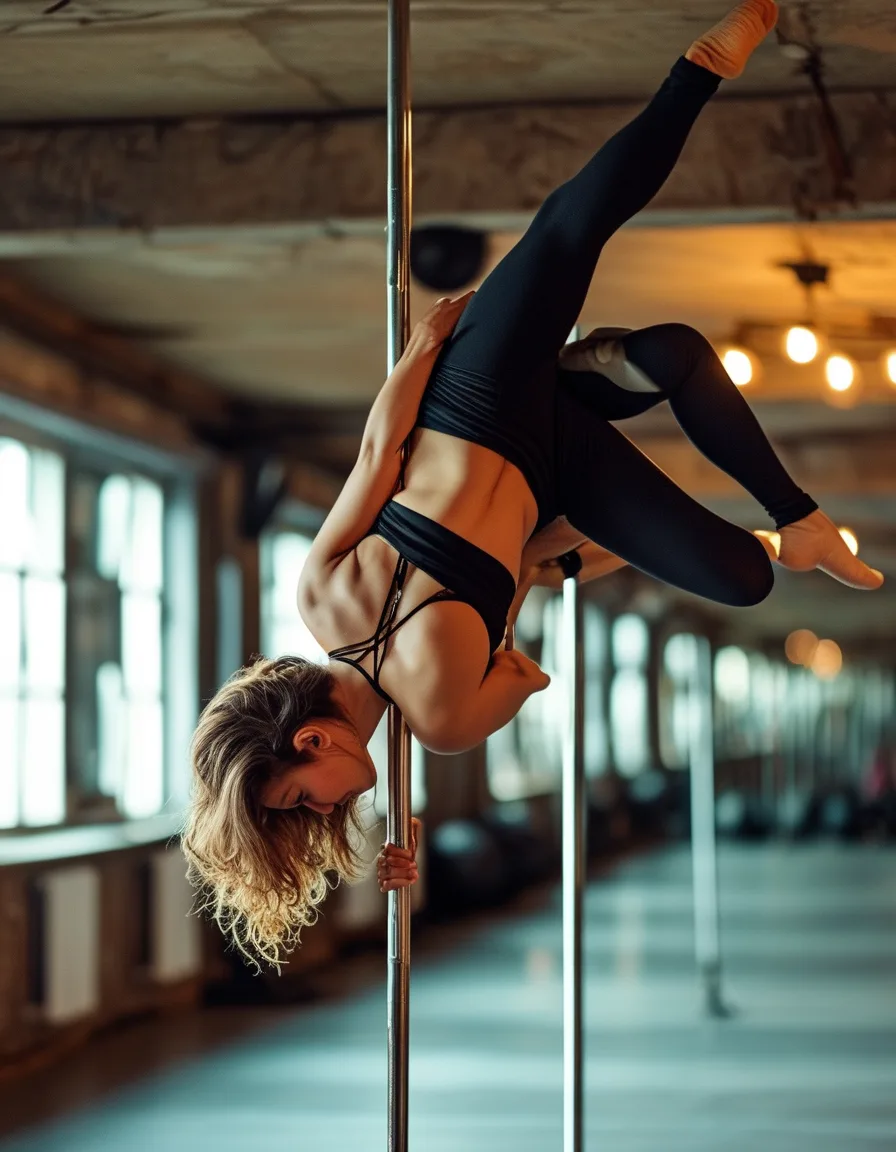
The first-year sequence: the basic spins (the fireman and chair spins of month one — grip confidence and the momentum feel; the moves that convert curious into enrolled), the first climb (months 1-3 — the full-body pull that recruits grip, lats and thighs; the milestone where pole reveals itself as strength training), the pole sit and holds (the skin-conditioning gateway — the thigh grip that hurts then doesn’t; the tolerance that unlocks the intermediate catalog), the crucifix-and-layback family (the trust-your-grip tier), and the first invert (months 6-12 for most — going upside down is pole’s belt-test moment; the milestone that reorganizes your sense of what your body does).
The Strength Between Moves
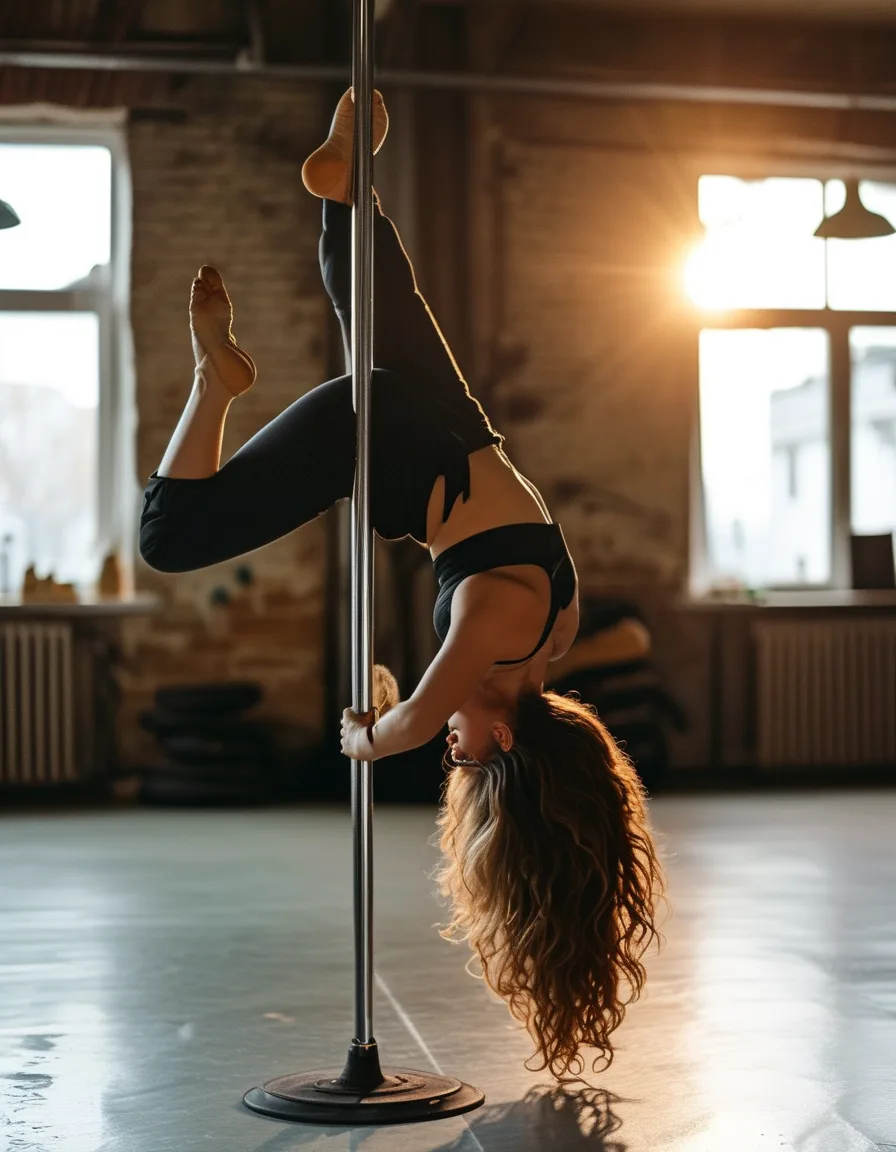
What each milestone builds and demands: the invert prerequisites honestly (the knee-tuck strength — hanging knee raises to chest, the controlled-not-kicked standard; the pulling strength of solid climbs; instructors gate inverts on these because kicked-up inverts are the injury pattern), the conditioning homework (the pole-conditioning chapter’s between-class work — dead hangs, tuck holds and the shoulder-stability tier that accelerate every milestone), the grip economics (the grip-lab crossover at full relevance — pole progress IS grip progress; the forearm endurance that decides session length), and the both-sides doctrine (every move trained on both sides — the asymmetry that’s cute at month two is a plateau at month eight; the weak side is homework, not personality).
The Timeline Honesty
The realistic calendar: the variance truth (the first invert spans months 4 to 18 across bodies and backgrounds — the upper-body training history, the class frequency and the bodyweight math all vote; the timeline is yours, not the cohort’s), the frequency lever (twice-weekly classes progress roughly twice as fast as weekly — the consolidation math of skill sports), the plateau protocol (stuck milestones respond to the strength homework more than more attempts — the invert that won’t come usually needs tuck-strength, not courage), and the comparison ban (the studio’s month-three prodigy has a gymnastics childhood — the only legal comparison is your own month one; the pole-fitness-confidence chapters exist because this sport photographs progress so visibly).
The Celebration Culture
The milestone economy: the film-everything habit (the wobbly first climb footage becomes treasure by the invert era — pole progress is visible like few sports; the archive is motivation infrastructure), the studio celebration norms (pole culture cheers milestones loudly — the first-invert applause is a community ritual; the beginner’s wins are everyone’s entertainment), the bruise-and-burn honesty (pole kisses are the sport’s mile-markers — the skin conditions, the grip toughens; the veterans’ shins remember every milestone), and the strength reframe (the year’s ladder built pull-up-adjacent strength, iron grip and core control that gyms charge for separately — pole is strength training wearing performance’s clothes, and the milestones are its PRs). Climb, hold, invert: the year, measured in moves.
Spins then climbs then inverts, tuck strength gates the upside-down, both sides always, film everything. Pole’s first year is a strength program with named PRs — earn the ladder rung by rung.
Keep Reading
This article is for general informational and styling purposes only. Fit, sizing, and product availability may vary — check current details before purchasing.