Why Your Inner Thigh Grip Bruises More Than Your Hands
Quick Answer: Inner thigh bruising happens because the grip works by pressing soft tissue against the pole across a small contact area, and the inner thigh has thin skin over superficial blood vessels with little muscle padding. Hands, by contrast, have thick skin, dense fascia, and are built for load. Bruising is normal for beginners and should reduce substantially within 4 to 8 weeks as tissue adapts. If it is not decreasing, the usual causes are sliding rather than gripping, and too much repetition on one side.
Everybody warns you about the hands. Nobody adequately prepares you for looking at your legs after week two.

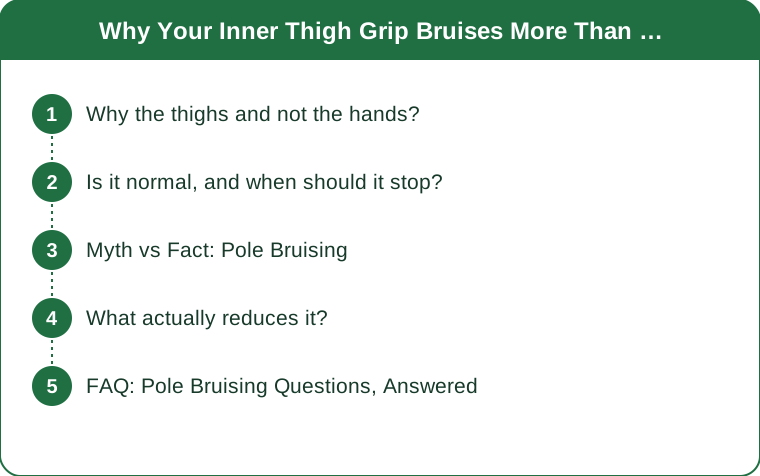
Why the thighs and not the hands?
Because the two areas are structurally different and are doing different jobs.
Palm skin is thick and built for load. The skin on your hands is several times thicker than the skin on the inner thigh, with a dense fibrous layer beneath it that distributes pressure. It is anatomically designed for gripping.
Inner thigh skin is among the thinnest on the body, with superficial capillaries and little muscle bulk between skin and bone. Pressure there compresses vessels directly, and compressed vessels leak - which is what a bruise is.
The contact area is small. A pole is roughly 40 to 45 mm in diameter, so your body weight is transmitted through a narrow strip. Pressure is force divided by area, and a small area means high pressure.
Friction adds shear. Pure compression bruises; compression plus sliding damages more tissue and produces the deeper, more painful bruises. Sliding is what turns a normal bruise into a bad one.
And hands hurt in a different way. Hands blister, callus, and get sore - they are not spared, they simply fail differently because the tissue is different.
Is it normal, and when should it stop?
Very normal early on, and it should reduce noticeably within a couple of months.
Beginner bruising is expected. Essentially everyone who trains pole gets it, and the fact that experienced dancers largely do not is evidence that it adapts rather than being permanent.
Expect substantial improvement within 4 to 8 weeks of consistent training. Skin thickens slightly, tissue tolerance increases, and - most importantly - technique improves so there is less sliding.
Technique change accounts for most of the improvement. Beginners tend to slide into position and then grip. Experienced dancers place and grip in one motion, which dramatically reduces shear.
New moves reset the clock locally. Learning a new grip position will bruise a new area even after years of training. This is normal and not a sign of regression.
What is not normal: bruising that appears without corresponding training, bruises that are extremely large or slow to resolve, bruising accompanied by unusual bleeding elsewhere, or bruising that gets worse rather than better over months of consistent training. Any of those is worth a doctor’s opinion, particularly if you take blood-thinning medication.

Myth vs Fact: Pole Bruising
Myth: Bruises mean you are doing it wrong. Fact: Some bruising is inherent to the contact involved. Excessive bruising usually does indicate sliding rather than gripping, but the presence of bruises alone is not a technique verdict.
Myth: You should train through it to toughen up faster. Fact: Training the same bruised area repeatedly delays adaptation and risks deeper tissue damage. Alternate sides and vary moves - progress comes from consistency, not from re-injuring the same spot.
Myth: Moisturizer prevents bruising. Fact: Moisturized skin is more comfortable and less prone to abrasion, but it also reduces grip - which can increase sliding. Moisturize after training, not before, and keep it off contact areas on training days.
Myth: Arnica removes bruises. Fact: Evidence for topical arnica is mixed at best. It may modestly help perceived soreness. Nothing topical meaningfully speeds resolution of an existing bruise.
Myth: Longer shorts prevent bruising. Fact: They prevent skin contact, which prevents grip entirely - most pole grips require bare skin on metal. Covering the area removes the ability to do the move rather than making it safer.
What actually reduces it?
Three things, in order of effectiveness.
1. Stop sliding. This is the entire game. Place the leg in position with the grip already engaged rather than sliding into place and then squeezing. Shear damage is worse than compression damage, and eliminating the slide is the single largest reduction available.
2. Alternate sides and rotate moves. Training one side repeatedly concentrates all the damage in one place and prevents adaptation. Splitting practice between sides also produces better technique overall, which is a useful side effect.
3. Manage grip conditions. Slippery conditions cause sliding, and sliding causes bruises. Clean the pole between attempts, use appropriate grip aid for the conditions, and keep skin clean and dry before training. Studio humidity and temperature affect this more than most people account for - a cool studio in autumn changes grip noticeably compared to a warm one in summer.
Also worth doing: ice briefly after training if an area is sore, keep training frequency consistent rather than doing long gaps followed by intense sessions, and eat adequately - low vitamin C and iron status can affect bruising tendency.
And be patient with the timeline. Adaptation takes weeks, and the temptation to solve it faster with more training is exactly the wrong direction.

FAQ: Pole Bruising Questions, Answered
How long do pole bruises take to heal?
Typically 1 to 2 weeks for the color to fully resolve, similar to any bruise. Deeper bruising from a fall or a heavy slide can take longer.
Should I train on a bruised area?
Light work is usually fine; anything painful is not. Training a genuinely sore area repeatedly is what turns normal bruising into a longer-term problem. Train the other side.
Do experienced pole dancers still bruise?
Routine training, generally not much. New moves and new grip positions, yes - which is why even advanced dancers have periods of bruising when learning something unfamiliar.
Does grip aid help with bruising?
Indirectly and significantly, because better grip means less sliding, and sliding is what causes the worst bruises. Match the product to the conditions - what works in a humid summer studio may be wrong in a dry, cool autumn one.
This is general information, not medical advice. Unexplained or unusually severe bruising should be assessed by a doctor.
TL;DR:
- Inner thigh skin is thin, with superficial vessels and little padding, and a 40 mm pole concentrates pressure into a narrow strip.
- Sliding causes the worst bruises - shear damage is worse than compression, and eliminating the slide is the biggest single fix.
- Expect substantial improvement in 4 to 8 weeks; new moves will bruise new areas even for experienced dancers.
- Alternate sides, manage grip conditions, and moisturize after training rather than before.
The thing that actually changes the picture is the realization that bruising is mostly a technique readout rather than a toughness test. When your bruises reduce, it is usually because you stopped sliding - which means you also got better at the move. Those two improvements arrive together, which is a more encouraging way to look at a difficult first two months.
Keep Reading
This article is for general informational and styling purposes only. Fit, sizing, and product availability may vary — check current details before purchasing.