Why Your Pole Spins Feel Faster on Humid Days — and Slower on Dry Ones
Quick Answer: Humidity changes the friction between skin and pole. In dry air, skin grips more and spins feel slow and sticky; in humid air, a thin layer of moisture reduces friction and spins accelerate. Late summer is peak humidity in many places, and the transition to dry autumn air is when most people suddenly feel their grip change.
It is the room, not a loss of skill.

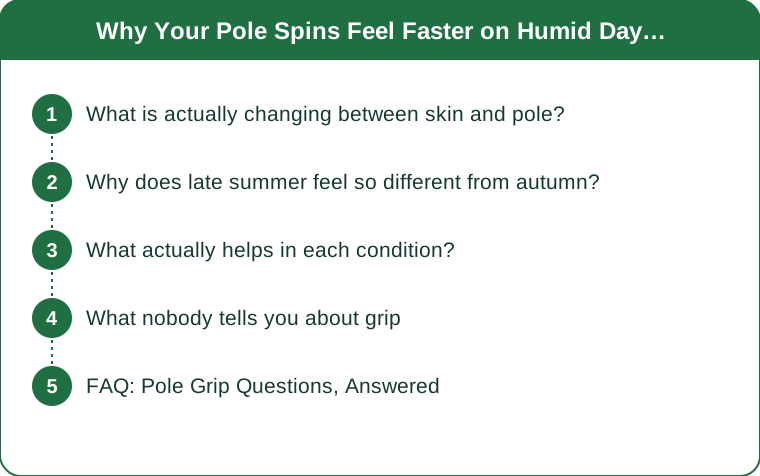
What is actually changing between skin and pole?
Skin friction depends on moisture level in a non-linear way. Completely dry skin has moderate friction. Slightly damp skin actually has higher friction — this is why people lick a finger to turn a page. Genuinely wet skin has much lower friction because the water layer separates the surfaces.
That gives three distinct states. Dry studio, dry skin: sticky and slow. Warm studio, slightly damp skin: peak grip, which is why a proper warm-up improves grip. Humid studio, sweating: slippery, fast, and hard to control.
The pole surface temperature matters as much as the air. A chrome pole in a cool room is colder than your hands, so moisture from your skin condenses onto it. That thin condensation layer is the classic slippery-pole feeling on a cold morning.
Pole material behaves differently. Chrome is the most humidity-sensitive. Brass grips better in humid conditions because it is softer and slightly more porous. Powder-coated and silicone poles are much less affected by moisture, which is why studios in humid climates often prefer them.
Why does late summer feel so different from autumn?
Absolute humidity peaks in late summer. Warm air holds far more water vapour, so August air in most temperate places carries several times the moisture of a cold January day even at the same relative humidity reading.
Heating changes everything. Once heating comes on in autumn, indoor relative humidity often drops sharply — commonly from around 55 to 60 percent down to 30 percent or lower. That is a large change in grip conditions and it happens over a few weeks.
Studios respond to this differently. A studio that runs a dehumidifier in summer may run nothing in autumn, and the swing between the two is where people report grip suddenly changing.
Your skin changes too. Skin hydration drops in dry air, and drier skin is harder and less compliant. Compliant skin conforms to the pole surface and increases contact area; hard, dry skin does not.

What actually helps in each condition?
Humid, slippery days: dry grip aids. Rosin-based and drying grip products work by absorbing surface moisture. Apply thinly — over-application makes the surface gummy and creates a different problem.
Wipe the pole between every attempt, not every few. In humid conditions, residue and moisture accumulate fast, and a wipe-down takes ten seconds.
Dry, sticky days: a lighter touch and a longer warm-up. Warm skin grips better than cold skin, and the sticky feeling is often just cold hands. Five extra minutes of warm-up usually resolves it.
Very dry days: moisture, not powder. Slightly damp skin has more friction than bone-dry skin, so a light wipe with a damp cloth can genuinely improve grip when the air is very dry. This surprises people.
Both conditions: clean the pole properly. Body lotion, sunscreen residue and skin oils reduce grip far more than humidity does. Isopropyl alcohol on chrome, at the start of the session, removes the actual problem.
Never use lotion on training days. Even hours before, moisturiser transfers to the pole and stays there. This is the most common self-inflicted grip failure.
What nobody tells you about grip
Fear reduces grip more than physics does. Anticipating a slip produces a tighter, higher-pressure grip, which reduces contact area and fatigues the forearm faster. A relaxed hand with full contact grips better than a clenched one.
Grip strength fatigues before you notice. Forearm endurance drops well before the arm feels tired, and most late-session slips are fatigue rather than conditions.
Skin adapts over months. Regular training gradually thickens the skin at the main contact points, which changes grip characteristics. Beginners and long-time trainers genuinely experience different friction on the same pole.
Inner thigh grip depends on skin, not strength, which is why it is the first thing to go when the studio is humid and the last thing to return after a break.
And the practical one: the pole is usually coldest at the base and warmest where hands have been. Spins at different heights on the same pole can genuinely feel different, and this is why.
FAQ: Pole Grip Questions, Answered
Should I use grip aid every session?
No. Use it when conditions require it. Constant use makes it harder to feel what the pole is actually doing, and residue builds up on the pole over time.
Why is my grip worse first thing in the morning?
Cold hands and cold poles. Body temperature is at its lowest overnight, and a cold pole condenses moisture from warm hands. A proper warm-up matters more for morning classes than evening ones.
Is a slippery pole dangerous?
It changes what you should attempt. Reduce to moves you can control, spot properly, and do not try new inversions on a day when grip is unreliable. Adjusting the session is the correct response, not pushing through.
This is general information, not medical advice. If you have persistent joint or skin problems, see a professional.
TL;DR:
- Grip is friction, and friction peaks with slightly damp skin — not bone dry, not wet.
- Humid late summer makes spins fast and slippery; dry autumn heating makes them sticky and slow.
- Chrome is the most humidity-sensitive pole; brass and silicone are far less so.
- Clean the pole with alcohol and never use lotion on training days — residue beats humidity every time.
- On very dry days, a slightly damp cloth improves grip more than powder does.
Read the room before you blame the technique.
Keep Reading
This article is for general informational and styling purposes only. Fit, sizing, and product availability may vary — check current details before purchasing.