Pole Dance Bruises Aren't Actually a Sign You're Progressing (Here's What They Really Mean)
Quick Answer: Some bruising is real and unavoidable — you’re gripping a steel pole with bare skin. But the amount and especially the location track technique quality, not dedication. A bruise that shows up in the same spot every week is a specific, fixable error in one move. Excessive bruising usually means you’re using body pressure to hold a position that better grip and positioning would hold instead. Bruises are diagnostic feedback, not a trophy.
There’s a certain kind of post-class photo in every pole dance group chat. Purple thigh, caption along the lines of pole kisses 💜.
It’s a genuinely nice bit of solidarity. It’s also quietly discouraging the one question that would actually help: why does this keep happening in exactly the same place?

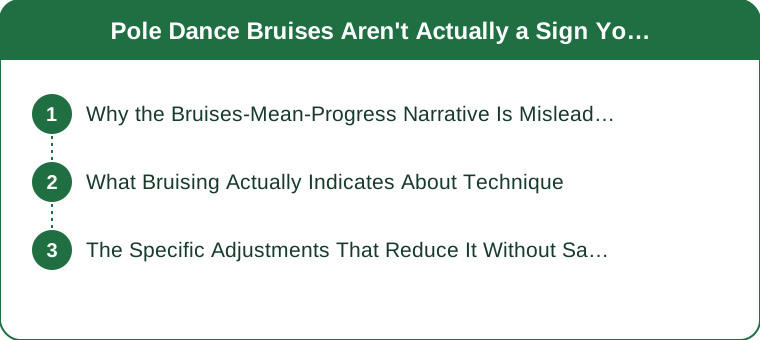
Is Bruising Really Just Part of Pole?
Partly yes, and that’s what makes the narrative sticky.
A baseline is genuinely unavoidable. The sport involves pressing bare skin hard against a metal pole. Some contact bruising is a realistic cost, and nobody trains around it entirely.
But severity and location vary by technique, not by effort. This is the part the badge-of-honor framing obscures. Two people putting in identical hours can have very different bruising, and the difference is usually technique quality — not who’s tougher or more committed. The culture treats bruising as an output of dedication. It’s mostly an output of execution.
And the framing discourages the useful question. When bruises are proof of commitment, “how do I get fewer of these?” sounds like asking how to work less hard. So people don’t ask, and repeat the same error for months.
The accurate version: baseline bruising is normal. Excessive or consistently location-specific bruising is information.

What Do My Bruises Actually Tell Me?
Same spot, every week = one specific technique error. Random bruising in varied places is contact noise. A bruise that reliably appears on the same inner thigh, the same hip, the same forearm, session after session, is a repeated execution problem in one particular move or grip. That’s not bad luck — it’s a pattern with a cause you can find.
Excessive bruising overall = brute force substituting for technique. When you don’t yet have the grip strength or positioning to hold a move efficiently, the body compensates by mashing more surface area against the pole and squeezing harder. More contact pressure, more bruising. The same move executed with proper grip and body position generates markedly less.
The clincher: bruising goes down as technique improves. This is the observation that flatly contradicts the more-bruises-more-dedication story. Advanced practitioners with far more training volume than you often bruise less, because efficient technique produces less pressure. If bruising tracked dedication, that would be backwards.
So treat a bruise map like a form check. Where is it, and which move put it there?
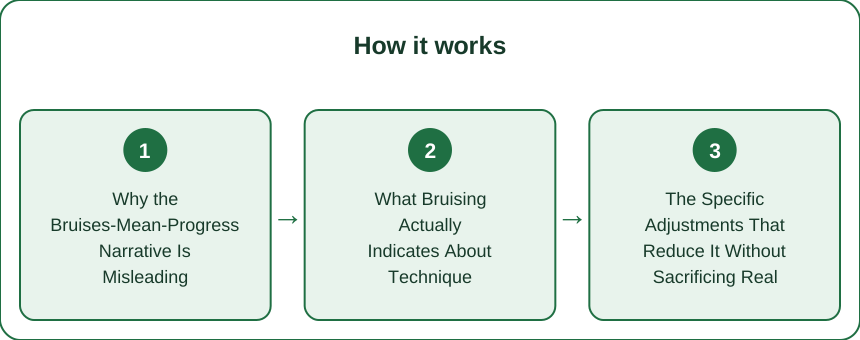
What Nobody Tells You About Reducing Bruising
Take the specific bruise to your instructor. Not “how do I bruise less” — “I get this exact bruise here every time I do this move, what am I doing?” Instructors can usually answer that in one attempt. Repeating the move and waiting for your skin to toughen up is not a plan; skin doesn’t toughen that way, and you’ll spend a season finding out.
Build grip and core strength outside class. This is the structural fix. Insufficient grip strength forces you to hold positions with body contact and pressure instead — which is the bruising. Dead hangs, 3 sets to near-failure, 3 times a week. Add towel hangs and farmer’s carries. Core work for the positioning: hollow holds, hanging leg raises. Give it 8 weeks and the compensations start disappearing on their own.
Slow the progression down. Attempting a move before you have the underlying strength and positioning for it produces the single worst bruising there is, because a forced attempt is nothing but compensation. It also produces the slowest progress. The dramatic bruise from last week’s advanced attempt isn’t evidence you were close.
A note on grip aids and skin: more skin contact helps grip, which is why pole is trained in minimal clothing — but that’s about the specific contact points for a given move, not about maximizing pressure everywhere. Warm skin grips better than cold, so a proper warm-up genuinely reduces the slipping that causes people to squeeze harder.
Mini FAQ
How long do pole bruises usually take to fade?
Typically 1–2 weeks, depending on depth and where they are. If a bruise is still dark after three weeks, or is painful to touch rather than just visible, that’s worth checking.
Should I ice after class?
Ice in the first 24 hours can reduce how much a fresh bruise develops. Beyond that it doesn’t do much. Arnica gets recommended constantly in pole circles; evidence for it is thin, and it’s unlikely to hurt.
When should I see a doctor?
See a provider for bruising that appears with very little contact, bruises that keep growing after a few days, bruising accompanied by significant swelling or loss of joint movement, or a sudden unexplained increase in how easily you bruise generally — easy bruising can have medical causes unrelated to training.
TL;DR:
- Some bruising is unavoidable; the amount and location reflect technique, not toughness.
- Same-spot bruising every week = one specific fixable error in one move.
- Excessive bruising = using body pressure to compensate for grip and positioning you don’t have yet.
- Better technique reduces bruising — which is why the badge-of-honor framing is backwards.
- Fix it with targeted instructor feedback, grip and core strength work, and slower progression.
Keep Reading
This article is for general informational and styling purposes only. Fit, sizing, and product availability may vary — check current details before purchasing.