Your First Pole Spins: A Beginner's Guide to Spinning With Control (and Confidence)
Quick Answer: Your first pole spin should be a step-around front spin on a static pole. Grip high with your outside hand, walk 2–3 steps around the pole to build momentum, then hook your inside leg and let your grip and core carry you around — don’t yank. Land on the balls of your feet, knees soft. Grip strength and control matter far more than speed, and most beginners get their first clean spin within 2–3 classes.
There’s a specific moment in pole where it stops being a series of poses and becomes movement. It’s your first spin, and everybody remembers theirs.
It’s also the moment most people discover that momentum is not the same thing as control — usually while landing sideways and slightly dizzy.
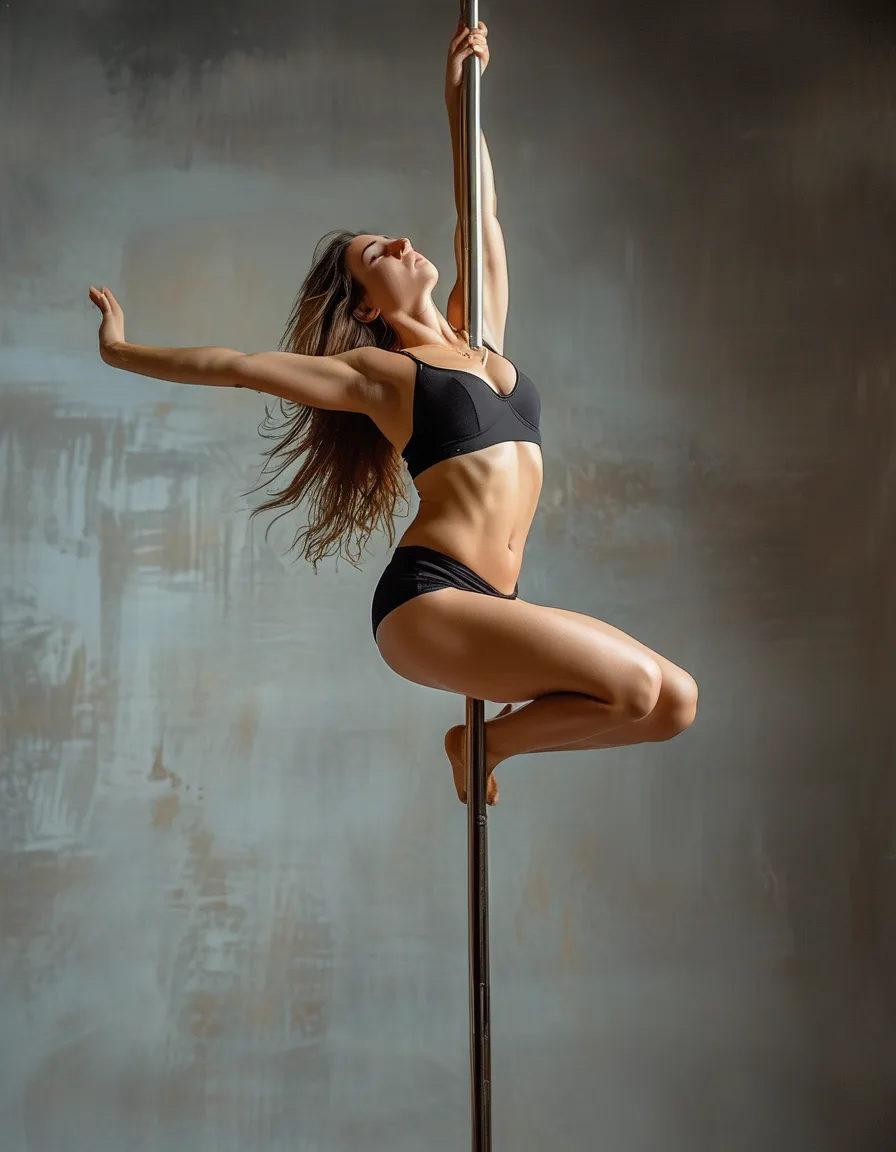
Why Spins Are the Milestone Everyone Chases
Static holds teach you to grip. Spins teach you to move, and that’s a different sport.
Before your first spin, pole fitness is essentially isometric strength work — climbs, holds, and conditioning. The spin is where the pole starts feeling like a dance partner rather than a piece of gym equipment. Two poses connected by a spin is choreography; two poses without one is just two poses.
It’s also a legitimate strength benchmark. A controlled spin requires enough grip endurance to hold your bodyweight for 3–5 seconds while rotating, enough core engagement to keep your body from swinging away from the pole, and enough shoulder stability to keep the joint safe under load. When those three arrive together, the spin happens. That’s why it feels earned.
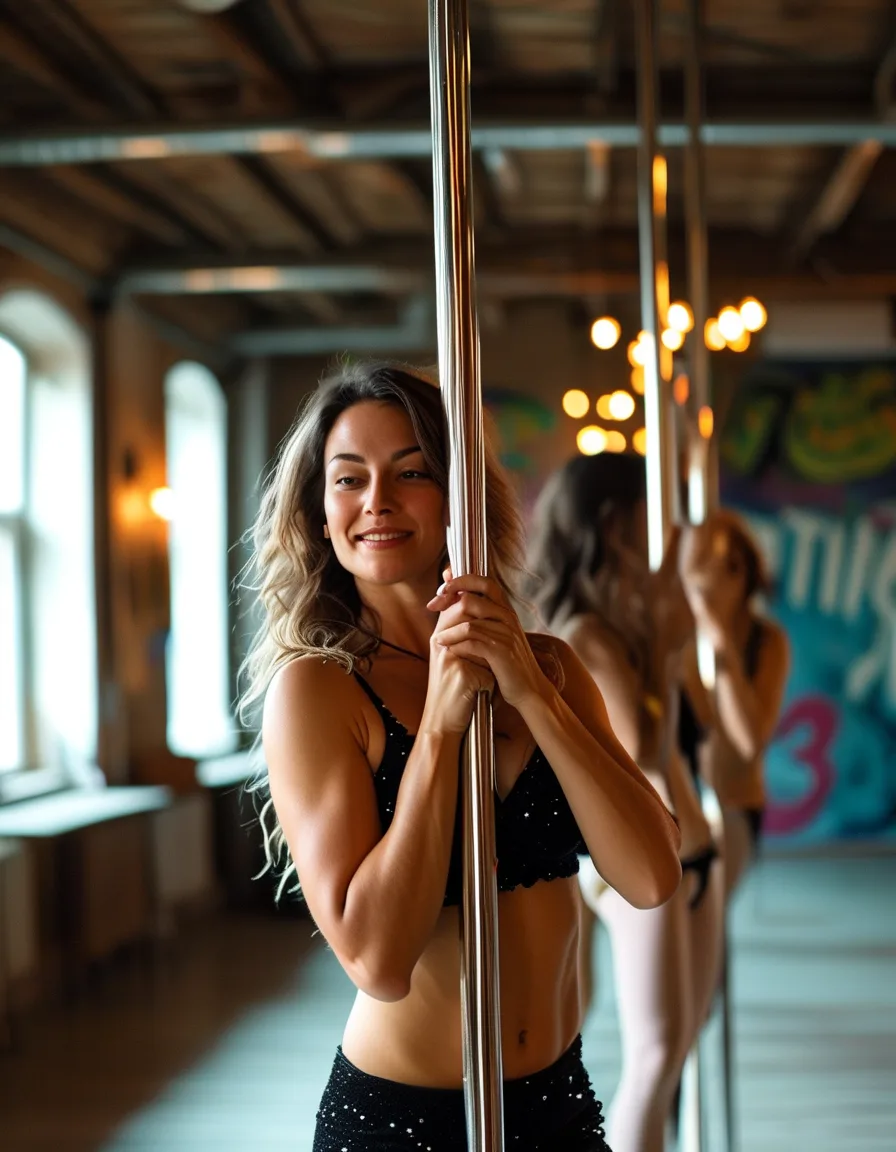
How to Do Your First Pole Spin (Step Around, Step by Step)
1. Set your grip. Outside hand (the one further from the pole as you face it) reaches above head height and grips firmly. Thumb wraps. Inside hand lower on the pole for stability.
2. Set your shoulder. This is the step beginners skip and it’s the one that prevents injury. Pull your shoulder blade down and back — do not let the shoulder ride up toward your ear. An unengaged shoulder under bodyweight is how people hurt themselves.
3. Walk into it. Take 2–3 walking steps around the pole, staying close. This builds momentum smoothly rather than jerking into it. Walking around the pole is a skill worth practicing on its own for a whole class.
4. Commit and hook. On the last step, transfer your weight onto your hands and hook your inside leg against the pole — inner thigh and knee making contact. Your outside leg extends.
5. Engage everything. Core braced, arms bent slightly (never locked straight — locked elbows take the load off your muscles and put it into the joint), body close to the pole. The closer you are, the more control you have. Beginners instinctively lean away, which is exactly backwards.
6. Spot your gaze. Pick a fixed point and let your head turn last, snapping back to it — the same technique ballet dancers use. This is the difference between one dizzy spin and being able to do five.
7. Land deliberately. Balls of the feet first, knees soft, hands still on the pole until you’re stable. A controlled dismount is part of the move, not an afterthought.
Expect it to take 2–3 classes. Expect the first ones to be ugly. Both are normal.
5 Mistakes Everyone Makes on Their First Spins
1. Using momentum instead of grip. Throwing yourself around the pole works exactly once and teaches nothing. If you can’t slow the spin down, you don’t control it. Practice at half speed until you can stop mid-rotation.
2. Leaning away from the pole. Instinct says create distance. Physics says the further your center of mass is from the pole, the more force your grip has to fight. Stay close.
3. Locking the elbows. Straight, locked arms transfer load into the elbow joint and shoulder capsule rather than the muscles. Keep a soft bend.
4. Skipping the shoulder set. A shrugged shoulder under bodyweight is the most common source of pole injuries in beginners. Down and back, every single time, before you leave the ground.
5. Wearing lotion. Body lotion, oil, and most sunscreens destroy grip completely and are genuinely dangerous on a pole. Skip them entirely on training days — and know that a clean pole, wiped with alcohol before your session, grips dramatically better than a fingerprinted one.
Building the Strength That Makes Spins Possible
If your spins aren’t happening yet, the missing piece is almost always grip endurance. Useful conditioning between classes:
- Dead hangs from a pull-up bar: 3 sets, hold as long as you can, aim to build toward 30 seconds.
- Forearm work: towel wrings, gripper squeezes, or simply farmer carries with heavy bags.
- Hollow body holds: 3 x 20 seconds. This is the core position a spin actually demands.
- Scapular pull-ups: 3 x 8. Teaches the shoulder set from step 2, off the pole.
Twenty minutes, twice a week alongside class moves this along faster than anything else.
Spinning Safely
- Learn with an instructor first. Spins involve loading a shoulder with your full bodyweight while rotating. A first-hand correction in week one prevents a habit that hurts in year one.
- Mat your space. If you train at home, a crash mat under the pole is non-negotiable, and check your pole’s tension before every session.
- Wear grippy attire. Skin contact is what holds you on. Shorts and a top that exposes the inner thigh, upper arm, and side of the torso — the contact points the spin actually uses.
- Build dizziness tolerance gradually. Spotting helps enormously, but so does simply doing a few spins per session rather than twelve. It genuinely improves within a few weeks.
- Bruises are normal. “Pole kisses” happen to everyone at the contact points and fade as your skin and technique adapt. Sharp pain is not the same thing — stop for that.
FAQ
How long does it take to learn a pole spin?
Most beginners land a recognizable step-around spin within 2–3 classes, and a genuinely controlled one within 4–6 weeks. Grip endurance is usually the limiting factor, not technique, which is why off-pole conditioning speeds it up so much.
Why do I keep swinging away from the pole?
Because your core isn’t engaged and your arms are too straight. Brace your midsection as if bracing for a punch, keep a soft bend in the elbows, and consciously pull your body toward the pole rather than hanging off it.
Do I need a spinning pole or a static pole to learn spins?
Learn on static first. A static pole makes you generate and control your own momentum, which builds the grip and core strength the move actually requires. Spinning mode adds rotation for free, which feels amazing but hides gaps in your technique.
TL;DR:
- Start with a step-around front spin: grip high, set the shoulder down and back, walk 2–3 steps in.
- Stay close to the pole — leaning away multiplies the load on your grip.
- Soft elbows, braced core, spot your gaze, land on the balls of your feet.
- Grip endurance is the usual bottleneck: dead hangs and hollow holds twice a week.
- No lotion, clean the pole, mat the floor, and learn spins with an instructor first.
Your first pole spin is a rite of passage — the moment pole fitness clicks from static holds into actual flow. Control first, speed later.
Keep Reading
This article is for general informational and styling purposes only. Fit, sizing, and product availability may vary — check current details before purchasing.